A More Efficient Pathway to Reading through Linguistic Phonics
EBLI, short for Evidence-Based Learning Instruction, is a Linguistic Phonics or Speech-to-Print program that begins with what is hardwired into all of us: spoken language.
Before children ever learn to read, they already know thousands of words by sound. Linguistic Phonics builds on that knowledge by teaching struggling readers how the sounds they hear and say are represented in written words.
Rather than relying on the memorization of numerous phonics rules, children learn to listen to a word, identify its sounds, and understand the different ways those sounds can be spelled. They also learn that English is flexible—a sound may have several spellings, and a spelling may represent more than one sound.
Reading, spelling, writing (both composition and handwriting), and vocabulary are taught together, helping children develop a deeper understanding of how written English works. The goal is not simply to teach a child to read the words practiced during a lesson, but to give them the knowledge and skills to work out unfamiliar words for themselves.
For students who have struggled with traditional phonics instruction, approaching reading through the language they already know can offer a clearer path into print. This approach is suited for all ages kindergarten through adult.
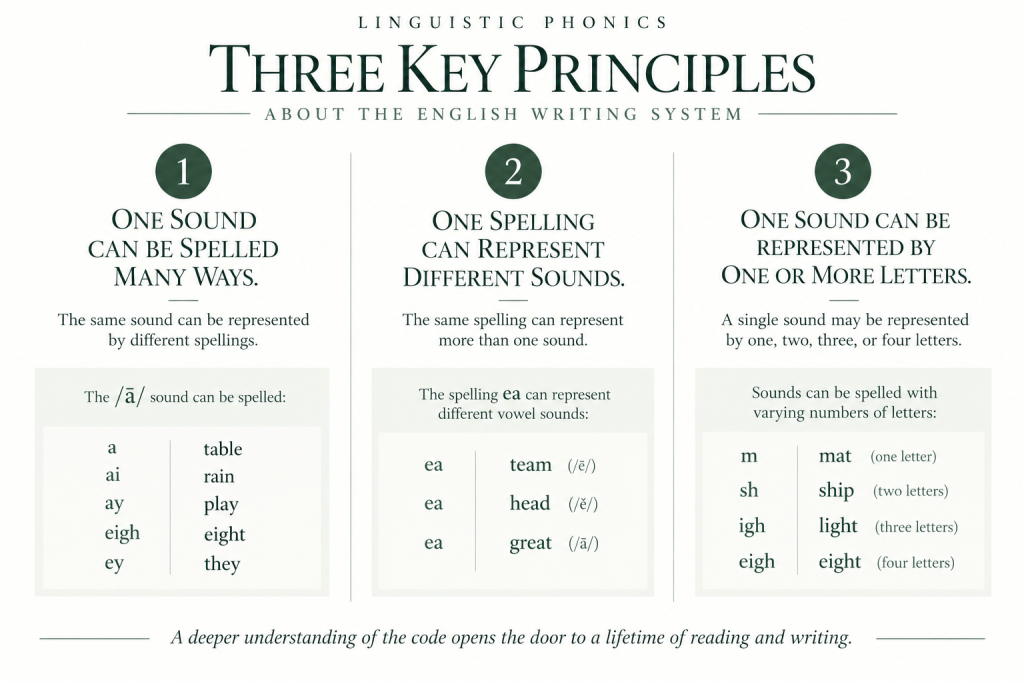
An interesting comparison of the traditional print to speech programs (eg. Orton-Gillingham) to speech to print programs (eg. EBLI).

